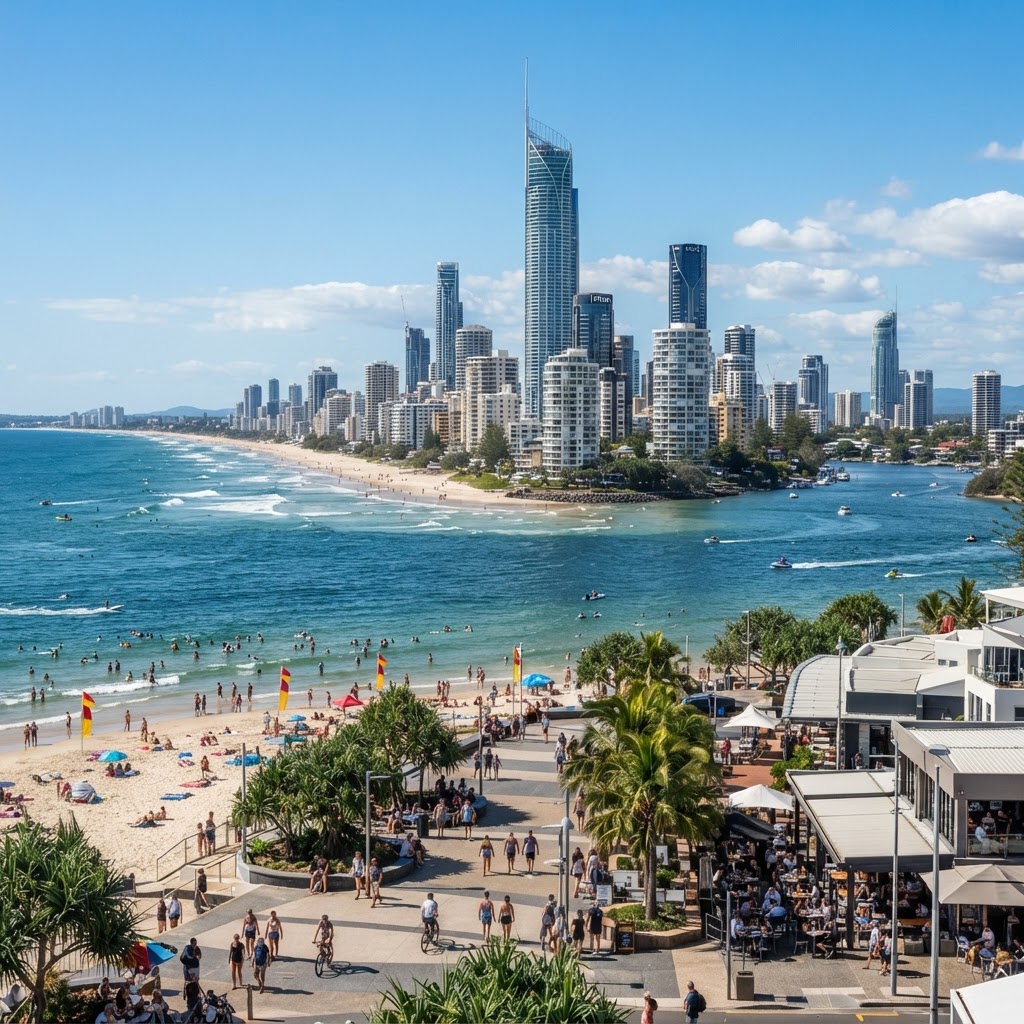
Gold Coast
The MoveWiser score reflects a city with high lifestyle appeal but significant economic barriers. While the Gold Coast excels in healthcare and climate, the extremely low housing affordability and high rental costs significantly impact the overall score for new residents.
Is Gold Coast right for you?
MoveWiser can compare your budget, lifestyle, climate preferences, and priorities with Gold Coast and other cities — and show you how well each one fits you personally.
See How Well Gold Coast Fits MeQuality of Life in Gold Coast
The Gold Coast's score is bolstered by its world-class lifestyle, strong tourism-based job market, and high-quality healthcare facilities. These factors attract a steady stream of young professionals and international visitors, keeping the local economy dynamic. However, the score is constrained by a severe housing crisis, characterized by record-high rents and low vacancy rates that make entry difficult for many. Additionally, the city's reliance on private vehicle transport and limited walkability outside of specific tourist hubs prevent it from achieving a higher overall rating.
Housing
The Gold Coast has become Australia’s most expensive rental market as of mid-2026, with median weekly rents reaching $900 and vacancy rates hovering around 1.3%. Buyers face a high-pressure environment where typical house prices rose nearly 14% in the year to June 2026, though risks like flood and bushfire overlays remain critical considerations for long-term value.
Neighborhoods
The city features a diverse range of residential areas, from the prestigious coastal enclaves of Sovereign Island and Burleigh Heads to more affordable northern growth corridors like Pimpama and Labrador. While the coastal strip attracts lifestyle-driven interstate migrants, the northern suburbs are increasingly popular with families seeking entry-level housing and proximity to Brisbane.
Economy & Jobs
Tourism and hospitality remain central to the Gold Coast, sustaining roughly 11% of the workforce through a variety of major attractions and theme parks. Beyond leisure, health care and social assistance have become primary employment pillars. Furthermore, construction and professional services are currently fueled by massive infrastructure investment, with nearly $10 billion in projects planned for 2026.
Commuting & Transportation
Daily travel is centered around the Pacific Motorway (M1) and a public transit network featuring the G:link light rail and the Gold Coast heavy rail line. While coastal areas benefit from frequent bus and light rail services, residents in inland suburbs remain largely car-dependent, though planned rail extensions toward Coolangatta aim to improve regional connectivity.
Lifestyle & Amenities
Residents enjoy a lifestyle defined by 55 kilometers of world-class beaches, extensive navigable waterways, and proximity to World Heritage-listed rainforests. The city balances a vibrant nightlife and dining scene in hubs like Broadbeach with a slower, outdoor-oriented pace of life that draws significant interstate migration.
Climate
The Gold Coast enjoys a humid subtropical climate with mild, sunny winters and warm, humid summers. It experiences high levels of sunshine year-round, making it ideal for outdoor coastal activities.
Cost of Living in Gold Coast
Population
691,230
Median Home Price
$950,000
Median Rent
$3,600/mo
Average Salary
$72,000
Groceries / month
$550/mo
Moving to Gold Coast
The Gold Coast offers a perfect blend of a thriving tech scene and a world-class beach lifestyle, making it ideal for young professionals. It is a major English-speaking hub with a large population of young people, excellent nightlife, and easy access to the Brisbane International Airport.
Pros and Cons of Living in Gold Coast
Pros
- • World-class beach lifestyle
- • Thriving tourism and hospitality sector
- • Excellent year-round climate
- • Proximity to Brisbane
- • Vibrant nightlife and entertainment
Cons
- • Extremely low rental vacancy rates
- • High cost of housing
- • Heavy reliance on private vehicles
- • Public transport limited outside light rail corridor
Who Gold Coast Is Best For
Where Gold Coast performs well
Frequently Asked Questions
Is Gold Coast a good place to live?
The Gold Coast is an excellent choice for those who prioritize a coastal lifestyle and outdoor recreation. It offers a unique blend of high-rise urban living in areas like Surfers Paradise and Broadbeach alongside relaxed suburban neighborhoods, though residents must navigate a competitive housing market.
Is Gold Coast affordable?
Affordability is currently a significant challenge, as the city has some of the highest rental prices in Australia. With vacancy rates often below 1%, renters face intense competition, and median weekly rents for houses frequently exceed $900.
What is Gold Coast best known for as a place to live?
It is best known for its 60 kilometers of coastline, world-famous surf breaks, and major theme parks. The city serves as a premier tourism hub while providing a growing tech and professional services sector for its permanent residents.
What are the biggest advantages of living in Gold Coast?
The primary advantages include the high quality of life, access to pristine beaches, and a strong tourism-driven economy. Residents also benefit from the G:link light rail system, which connects major hubs, and easy access to Brisbane via the M1 motorway or direct rail links.
What are the potential disadvantages of living in Gold Coast?
The main drawbacks are the severe housing shortage and the high cost of living compared to national averages. Additionally, the city's sprawling layout makes it difficult to navigate without a car, as public transport infrastructure is still expanding beyond the main coastal corridor.
What type of person or household is Gold Coast a good fit for?
It is an ideal fit for young professionals and digital nomads who thrive in energetic, social environments. Students also benefit from the presence of major institutions like Griffith University, though they must plan carefully for the high cost of local accommodation.
Related rankings
Cities Similar to Gold Coast
Data & sources
MoveWiser scores are AI-generated comparative estimates, not official statistics. The category scores above are produced by MoveWiser's data pipeline; cost figures and population are AI estimates informed by web data at the time of generation. Always verify specifics with primary sources before deciding.
Data sources (as reported during generation):
- id Profile 2025
- Empire Legal 2026
- Payscale 2026
- Wise Cost of Living 2026
- Numbeo 2026 — cost of living, rent & groceries
Find cities that fit you — not just one
Get personalized city recommendations with match percentages based on your exact budget, lifestyle, climate, and priorities — Gold Coast included.
Get My Personalized MatchesCookies & ads
We use cookies and similar technologies to personalize ads, measure ad performance, and improve your experience. Third-party vendors (including Google) may use cookies to serve ads based on your prior visits. See our Privacy Policy for details.